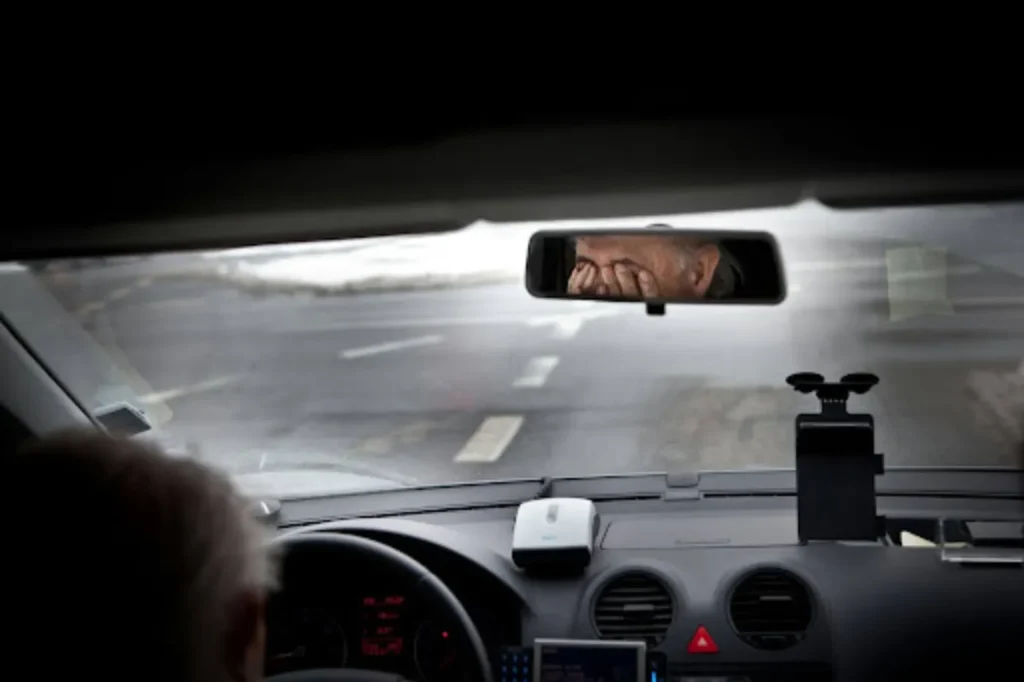
At Christie Bell & Marshall, we treat suspected fatigue crashes as high-stakes investigations. If you were injured in a fatigue-related crash, a Lafayette car accident attorney from our team can explain your options during a free consultation and help determine the strongest path forward. Your lawyer will step in early to analyze the timeline, preserve available records, and take control of insurer communications to prevent mistakes that could harm your case.

How Our Lafayette Driver Fatigue Attorneys Help You From Day One

Your case is only as strong as the proof we can collect before it disappears. When you work with our team, here’s what you can expect:

  1. Immediate evidence preservation. Your lawyer’s first priority will be to lock down the evidence that shows how and why the crash happened, including sending preservation letters to stop the destruction of key materials.
  2. Timeline reconstruction. Your lawyer will map the hours leading up to the impact using receipts, GPS routes, work schedules, phone activity, and witness accounts.
  3. Crash dynamics analysis. Drowsy driving collisions can be proved with a thorough analysis of braking patterns, lane position, impact speed, and vehicle damage to identify signs consistent with driver fatigue.
  4. Insurance strategy across every policy. Many fatigue cases involve layered coverage, for example, when the driver was on the job. We can identify all applicable policies, so you are not limited to one small liability plan.
  5. Shielding you from adjuster tactics. Insurers can use early recorded statements to box you into a narrative that minimizes injuries or disputes fault. Your lawyer knows how to handle this and will work to keep the claim anchored to verifiable facts.

When you work with Christie Bell & Marshall, you are getting a team that treats your case like the serious investigation it deserves. We handle the preservation demands, manage the insurer communications, and build a documented timeline that speaks louder than any denial. Our goal is to remove the burden of proof-gathering from your plate so you can focus on healing while we focus on holding the responsible parties accountable.

If you are ready to take the next step, reach out through our contact page or call our Lafayette office to schedule your free consultation.

Speak with a personal injury lawyer today. Call: 317-488-5500

Why Fatigued Driving Leads to Serious Crashes in Lafayette

Drowsy driving is dangerous because it slows reaction time, impairs judgment, and can lead to brief lapses of consciousness known as microsleeps. In fatigue-related crashes, drivers often fail to brake, steer away, or take other corrective action before impact. That absence of avoidance is one reason these collisions tend to cause severe damage and serious injuries.

Nationally, the scope is not small: NHTSA reports that 693 people were killed in drowsy-driving-related crashes in a year. In and around Lafayette, fatigue crashes show up in places including both speed and monotony, such as longer straight stretches, late-night routes, and commuter corridors where drivers push through the final miles home after a long shift.

Complete a Free Case Evaluation form now

What Counts as “Driver Fatigue” in an Indiana Injury Claim

From a civil-liability standpoint, fatigue is a form of negligence, meaning the driver failed to use reasonable care by choosing to drive when they were not alert enough to do it safely, or by continuing to drive after clear warning signs. Fatigue can come from:

  • Long work shifts, double shifts, or overnight schedules
  • Sleep disorders such as sleep apnea
  • Medication side effects that cause drowsiness
  • Long-distance driving without adequate breaks
  • Commercial dispatch pressure or unrealistic delivery windows
  • Illness, dehydration, or other conditions that impair alertness

Usually, the most important question is “What would a safe driver have done once the signs of fatigue appeared?” Pulling over, switching drivers, taking a rest break, or delaying a trip are all reasonable safety choices, and failing to take them can create liability when someone gets hurt.

Click to contact us today

Proving Fatigue When the Driver Denies It

Evidence that can support a fatigue theory includes:

  • Crash pattern indicators (lane drift, roadway departure, no braking): These are widely relied on by crash reconstructionists and law enforcement as circumstantial evidence of fatigue.
  • Witness observations (swerving, delayed reactions, head-nodding): Courts and insurers routinely accept lay witness observations when they describe concrete behavior.
  • Time-of-day factors: Late-night and early-morning crashes are well-recognized fatigue risk windows and are commonly referenced in expert analysis.
  • Work and sleep history (timecards, dispatch logs): This is some of the strongest evidence in fatigue cases, especially for commercial or shift workers.
  • Post-crash statements: Admissions about exhaustion or lack of sleep are highly probative and often very damaging to a defense.

Truck and Commercial Fatigue Cases and Hours-of-Service Rules

When fatigue involves a truck driver or other commercial operator, the case expands because federal safety rules are designed specifically to reduce the risk of exhausted driving. The hours-of-service regulations governing commercial drivers are found in 49 CFR Part 395, and they set limits on driving and on-duty time. FMCSA also explains these rules and how they apply in its Interstate Truck Driver’s Guide to Hours of Service, which is useful because it summarizes how logbooks and related documentation work in practice.

In a commercial fatigue case, our Lafayette truck accident lawyers examine the records that reveal how long the driver had been working and driving. That investigation often includes electronic logging device (ELD) data and edits, dispatch communications and load assignments, fuel, toll, and weigh-station records that confirm true driving time, delivery window requirements that may incentivize unsafe driving, and prior safety violations and compliance history.

Who Can Be Liable for a Fatigue-Related Crash

Fatigue claims can involve more than one responsible party, for example, when the driver was working or driving a company vehicle. Depending on the facts, potential defendants may include:

  1. The fatigued driver
  2. An employer that encouraged unsafe scheduling or ignored warning signs
  3. A trucking company or motor carrier that pushed hours beyond safe limits
  4. A vehicle owner who negligently entrusted the vehicle to an unfit driver
  5. A contractor or delivery company that imposed unrealistic route demands

Identifying every liable party matters because it can increase the available insurance coverage and prevent a serious claim from being squeezed into a low-limit policy.

Attorney Lee C. Christie notes “I’ve seen fatigue claims turn on the first 72 hours after a crash,” says Partner Lee C. Christie. “That’s when the most telling records still exist and third parties haven’t had time to ‘clean up’ the paper trail. The best approach is to treat suspected fatigue like a commercial-evidence case immediately, even when the at-fault driver was in a personal vehicle, because proof of exhaustion often lives in schedules, time stamps, and routine habits rather than a single smoking-gun statement.”

Damages Available After a Driver Fatigue Accident

A fatigue crash usually creates more loss than the first round of bills suggests, especially if you miss work or your symptoms interfere with daily function. Christie Bell & Marshall works to document the full scope of damages, such as:

  • Emergency care, hospital treatment, surgery, rehabilitation, and follow-up visits
  • Physical therapy, occupational therapy, and specialist care
  • Medication, imaging, and diagnostic testing
  • Lost income and reduced future earning capacity
  • Pain and suffering, emotional distress, and loss of enjoyment of life
  • Property damage and out-of-pocket expenses tied to recovery

We also evaluate whether multiple policies may apply, including commercial liability coverage or other sources that increase the ability to pay full value. When clients ask what strong outcomes look like in real cases, we point them to the recoveries reflected in our case results as examples of what evidence-driven preparation can support when liability and damages are built the right way.

Start Your Lafayette Driver Fatigue Consultation

Driver fatigue cases demand careful preparation because a tired driver can deny it, and insurers will follow that denial unless the evidence forces a different conclusion. Christie Bell & Marshall focuses on preserving the records that reveal how the crash occurred, building a defensible liability timeline, and presenting damages in a way that reflects the costs the accident has had on your real life.

If you were hurt in a Lafayette crash you suspect was caused by a drowsy driver, contact us to schedule a free consultation. A lawyer from our team will listen to what happened and give you a clear plan for protecting your claim.

FAQs About Driver Fatigue Accidents in Lafayette

How do you prove a driver was fatigued if they deny it?

Fatigue is typically proven through a combination of crash dynamics, timeline evidence, work or travel history, witness observations, and documentation such as logs, receipts, and phone or GPS data that shows that the driver’s condition and choices were consistent with exhaustion.

Are fatigue crashes treated differently if the at-fault driver was working?

They can be, because employment-related driving may open the door to employer liability and commercial insurance coverage.

What if the crash was caused by a truck driver who exceeded the hours limits?

Under federal law, commercial drivers must follow strict driving and on-duty time limits designed to prevent fatigue. When a driver exceeds those limits and a crash occurs, it supports the argument that the driver was operating unsafely, which can be used as evidence of negligence.

Do fatigue crashes usually cause serious injuries?

They often do, because exhausted drivers may not brake or swerve in time, which increases impact speed and injury severity.