
 317-488-5500


This guide explains legal liability in multi-vehicle pileups, detailing how Indiana accident chain claims are resolved under the state’s modified comparative fault system to help victims secure fair compensation.
Understanding Modified Comparative Fault in Indiana
Indiana operates under a modified comparative fault system (specifically the “51% rule”), which directly dictates financial recovery in multi-vehicle accidents. A victim can recover damages only if they are found to be 50% or less at fault for the collision. If a jury or insurance adjuster determines a driver is 51% or more responsible for the chain reaction, that driver is barred from recovering any compensation. In a pileup involving three or more vehicles, liability is often split among several drivers based on their specific actions, such as tailgating, distracted driving, or sudden braking. For example, if you are awarded $100,000 in damages but found to be 20% at fault for not signaling, your payout is reduced to $80,000.
Establishing Liability in Chain Reaction Crashes
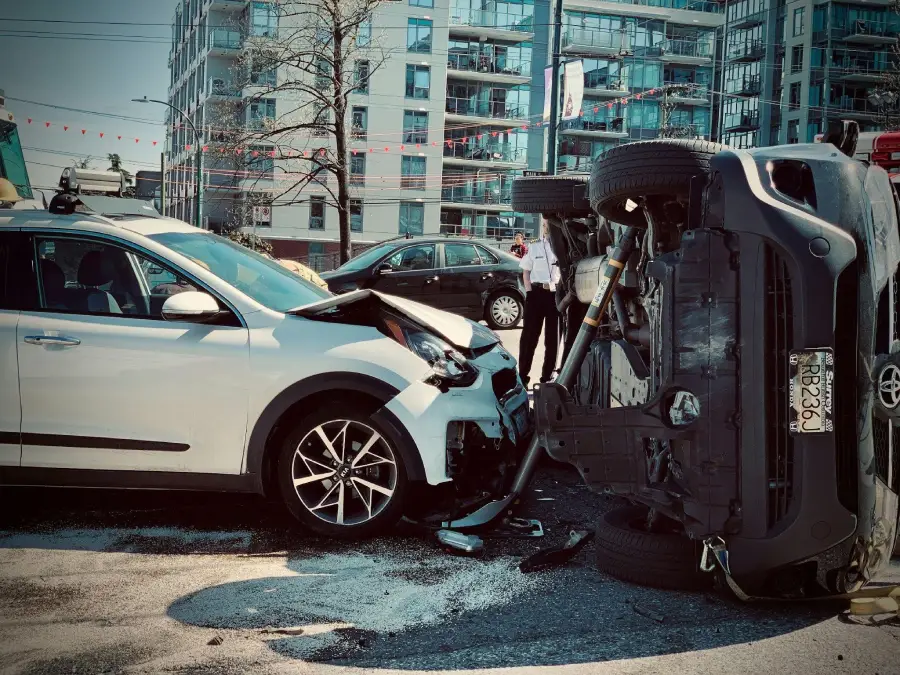
Determining the “proximate cause” in a chain-reaction accident is significantly more complex than in standard two-car collisions. Insurance companies frequently attempt to shift blame to the car in the middle, arguing they were following too closely, even if that car was pushed into the vehicle ahead by a third driver. To protect your claim, it is necessary to prove the sequence of impacts – specifically distinguishing between being “sandwiched” (pushed into the car ahead) versus hitting a car and then being hit from behind. Christie Bell & Marshall utilizes accident reconstruction experts to analyze skid marks, vehicle control module data (black boxes), and impact angles to establish the true chain of causation.
Immediate Safety and Secondary Collision Risks
The scene of a chain-reaction accident presents immediate life-threatening hazards known as secondary collisions, where unsuspecting drivers crash into the existing pileup. Victims should remain in their vehicles with seatbelts fastened unless there is an immediate threat of fire or explosion, as stepping onto the highway increases the risk of being struck by debris or other vehicles. Identifying hazards like leaking fuel, broken glass, or precarious vehicle positioning is critical for safety before emergency responders arrive.
Read more about immediate steps to take in our guide: What Should You Do Immediately After an Accident?
Hidden Injuries and Delayed Medical Emergencies
Multi-vehicle collisions often generate chaotic forces that cause injuries not immediately visible at the scene due to adrenaline and shock. Serious conditions such as internal bleeding, traumatic brain injuries (TBIs), or spinal cord damage may present symptoms hours or days later. Insurance adjusters frequently attempt to dismiss these delayed symptoms as unrelated to the accident chain, making it essential to secure expert medical testimony to substantiate the injury’s cause. Seeking a comprehensive medical evaluation immediately is vital not only for your health but to document the “chain” of physical injury for insurance claims.
Navigating Multiple Insurance Policies and Policy Limits
Chain reaction accidents often trigger a race for limited insurance funds, as the at-fault driver’s policy limits may not cover the total damages of multiple victims. If the driver who caused the pileup has a minimum liability policy, the available funds are distributed pro rata among all injured parties, often leaving victims with insufficient compensation. In these scenarios, filing a claim against your own Underinsured Motorist (UIM) coverage becomes essential. An experienced car accident attorney can identify every available insurance policy – including commercial policies if a truck was involved—to ensure full compensation for medical bills and lost wages.
The Role of Evidence in Multi-Car Disputes
Successfully disputing fault allegations in a pileup requires robust, immediate evidence collection that goes beyond a standard police report. Witness statements are crucial, as observers can often clarify which vehicle initiated the crash sequence. Photographs should document the damage to all vehicles involved, not just your own, as the severity of front vs. rear damage can prove whether a car was stopped before being pushed. In Indiana, the police report serves as a foundational document, but private investigation is often required to challenge inaccuracies when multiple officers produce conflicting narratives of the event.
Statute of Limitations for Indiana Claims
Indiana law enforces a strict two-year statute of limitations for filing personal injury lawsuits arising from automobile accidents. This clock begins ticking on the date of the crash. In complex chain-reaction cases, identifying the correct defendants (which may include other drivers, vehicle manufacturers, or government entities responsible for road design) takes time. Failing to file suit against the proper parties within this window results in a permanent forfeiture of the right to seek compensation.
Why Local Legal Leadership Matters
Combating large insurance carriers in multi-vehicle litigation requires a firm with the financial resources to hire top-tier experts and the local reputation to command respect in the courtroom. Lee C. Christie, Esq., the 2025 President of the Indianapolis Bar Association, leads a team that has secured landmark results, including a $60 million verdict against a major corporation. Unlike national firms that treat clients as case numbers, CBM Law operates from the historic Bals-Wocher House in Indianapolis, offering personalized, aggressive representation on a contingency fee basis – you pay nothing unless we win.
Actionable Steps for Victims
If you are involved in an accident chain:
- Check for injuries and call 911.
- Do not admit fault or apologize to other drivers; statements can be used to assign comparative percentage of fault.
- Exchange info with all drivers involved, not just the one who hit you.
- Take photos of the entire scene, including skid marks and debris fields.
- Seek medical attention even if you feel fine, to rule out internal trauma.
- Contact a lawyer before speaking to any insurance adjuster.
Get a Free Case Review with Christie Bell & Marshall or call (317) 488-5500 to discuss your legal options.
Call 317-488-5500 or complete a Free Case Evaluation form
