
 317-488-5500


Plainfield is one of the fastest-growing municipal hubs in Hendricks County. Its expansion brings significant challenges to local roadways. As farmland transforms into commercial real estate and nationwide distribution centers, traffic density escalates. The Indianapolis personal injury attorneys at Christie Bell & Marshall regularly assist motorists injured on these evolving corridors. Commuters, local residents, and long-haul commercial drivers share high-speed junctions every day. When drivers fail to exercise reasonable care at complex crossings, devastating collisions occur.
According to annual data published by the Indiana Criminal Justice Institute, failure to yield the right-of-way and aggressive driving remain primary contributors to collisions statewide. Plainfield experiences these hazards firsthand. The town serves as a crucial transit bridge between Indianapolis and rural Hendricks County. Understanding where crashes happen most often and what factors lead to severe harm helps drivers make safer choices on the road.
Why Plainfield Roads Experience Severe Intersection Collisions
Intersection wrecks are rarely random. Specific infrastructure characteristics combined with local economic demands create predictable conflict points throughout Plainfield. The town functions as one of the largest logistics epicenters in the Midwest. Vast industrial fulfillment complexes occupy acres along the eastern and southern perimeters. Tractor-trailers weighing up to 80,000 pounds mix with compact passenger vehicles continuously.
Commercial freight trucks require substantial space to maneuver and extended stopping distances to avoid disaster. When a freight hauler attempts a wide turn across multiple lanes, smaller cars are easily trapped in dangerous blind spots. Severe 18-wheeler collisions regularly stem from these spatial conflicts. Compounding this issue is the sheer speed of travel on multi-lane arteries such as Ronald Reagan Parkway and U.S. Route 40. High posted speed limits leave little room for error. When a driver gambles on a changing traffic light or pulls out without a clear sightline, violent impact is almost unavoidable.
Warehouse shift changes create another significant hazard. At specific hours of the morning and evening, thousands of logistics employees leave or enter distribution facilities simultaneously. Fatigued workers encounter congested turn lanes and impatient motorists. Rushed decision-making during these surges leads directly to angle impacts and chain-reaction crashes.
Analyzing Plainfield Crash Hotspots
Local law enforcement agencies, including the Plainfield Police Department, frequently respond to serious wrecks at several notorious junctions. The following crossings represent some of the highest-risk locations for travelers throughout the municipality.
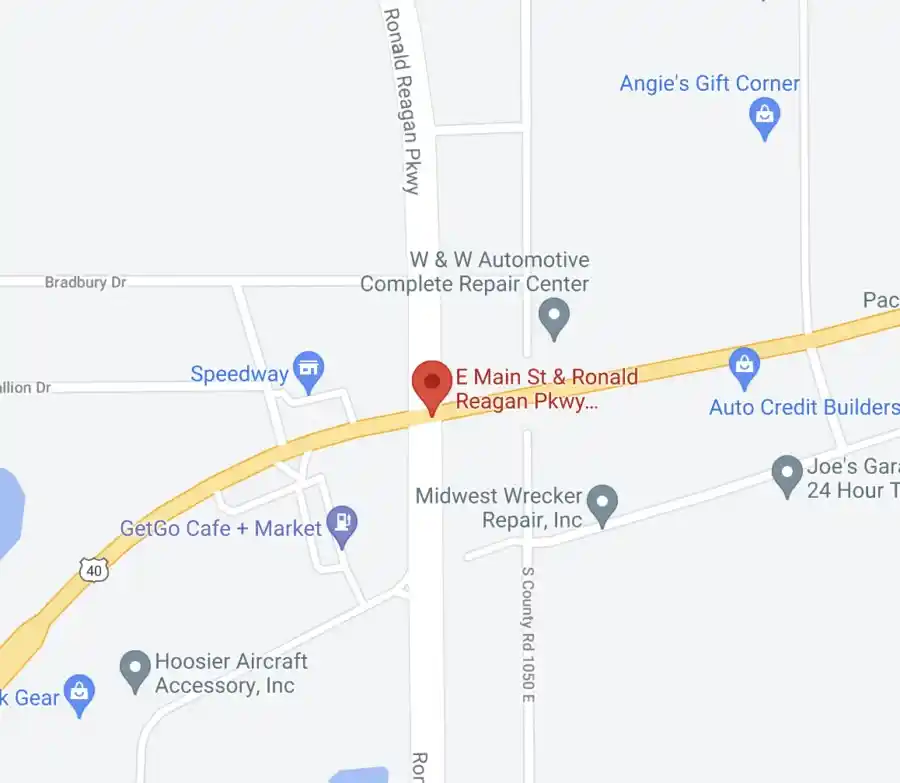
The Lethal Corridor: Ronald Reagan Parkway at U.S. Route 40
This massive multi-lane junction connects north-south regional traffic with east-west commuter routes heading straight toward Indianapolis. Ronald Reagan Parkway functions essentially as an expressway without grade separation. Meanwhile, U.S. Route 40, historically known as Main Street, carries dense passenger and commercial volume. Both highways feature high speed limits and long signal intervals.
The layout invites severe driver error. Motorists attempting to beat yellow lights accelerate into the intersection at speeds well above 50 miles per hour. When opposing drivers make unprotected left turns across several lanes of traffic, the outcome is frequently catastrophic. These collisions produce violent T-bone collisions that collapse driver-side vehicle compartments. Victims involved in broadside crashes at this intersection regularly suffer life-threatening internal trauma.
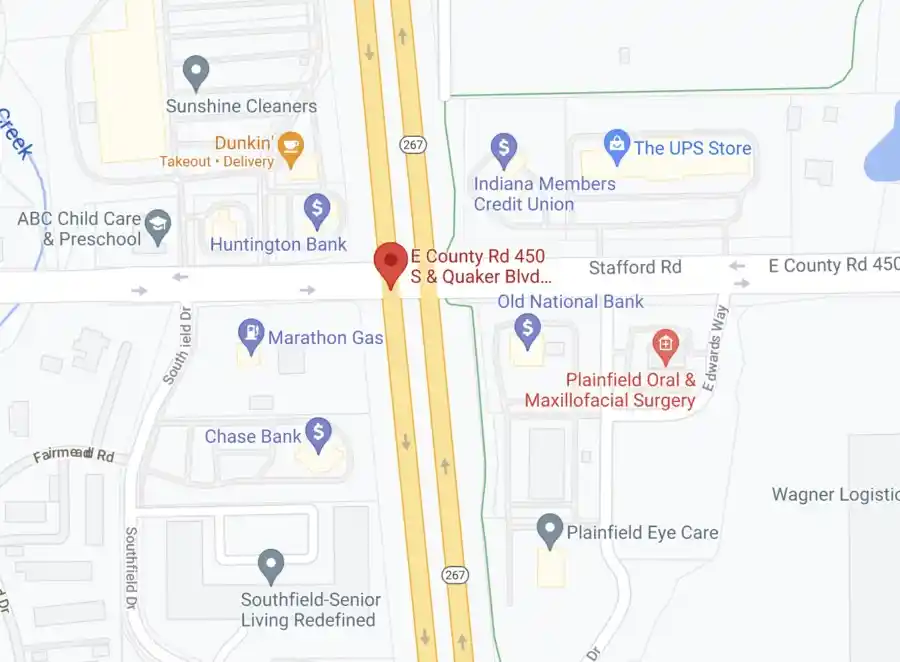
State Road 267 and Stafford Road
State Road 267, known locally as Quaker Boulevard, is Plainfield’s dominant commercial spine. Stafford Road cuts across the town, providing access to sprawling industrial parks and residential subdivisions. The intersection where these two arteries cross experiences chronic gridlock and frequent collisions.
During morning and evening rush periods, vehicles stack up extensively in turning bays. Impatient drivers often try to turn through narrow gaps in oncoming traffic. Assessing left-turn liability in Indiana often becomes central to resolving claims originating here. When a vehicle turns across oncoming lanes without absolute clearance, the oncoming vehicle strikes the passenger side with immense momentum. These wrecks cause severe injuries and bring traffic along Quaker Boulevard to a standstill.
The Historic Downtown Crossing: U.S. Route 40 and State Road 267
In the center of Plainfield, U.S. Route 40 intersects with State Road 267. This area combines traditional downtown retail storefronts with suburban highway density. Visual distractions abound. Commercial signage, curb cuts, closely spaced side streets, and pedestrians create a taxing sensory environment for motorists.
Navigating this hub requires constant vigilance. Motorists regularly brake unexpectedly to enter gas stations or restaurant parking lots. Distracted drivers following too closely cause rapid-fire rear collisions. In addition, drivers making complex turns across lanes of oncoming traffic frequently misread turning arrows. When traffic backs up through the core of town, frustrated motorists engage in reckless lane changes, increasing the frequency of broadside and sideswipe crashes.
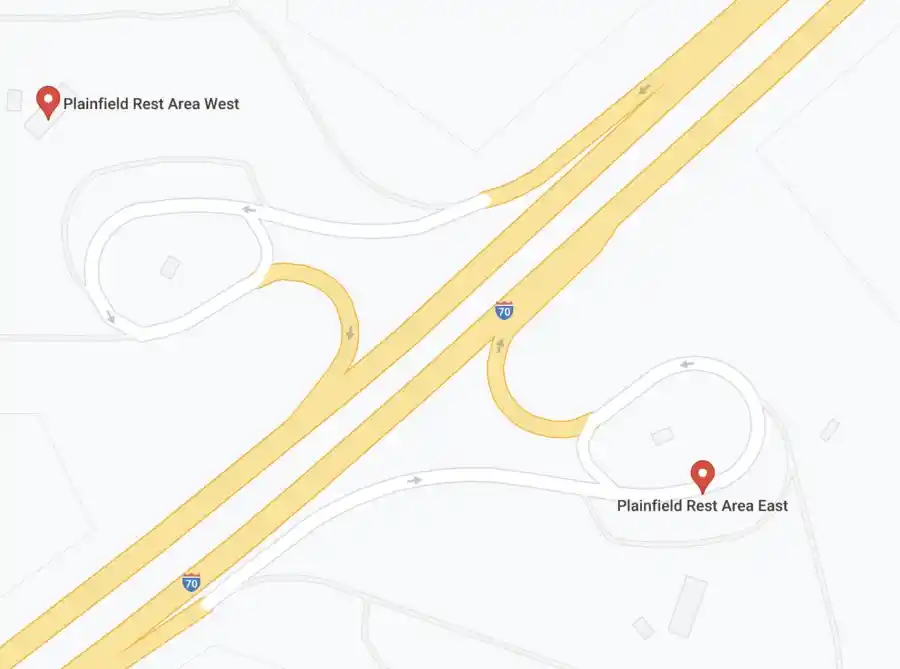
Interstate 70 Ramps at Quaker Boulevard
The interchange connecting Interstate 70 to State Road 267 represents another major collision zone in southern Plainfield. Vehicles exiting Interstate 70 enter the surface street at highway speeds. Drivers must immediately merge, slow down, and react to local signal cycles while navigating nearby service plazas, lodging sites, and fuel stops.
This interchange presents significant hazards involving heavy freight carriers. Semi-trucks entering and exiting the highway frequently make wide right turns or block lanes during congestion. Slower passenger vehicles that fail to anticipate these movements can become wedged beneath commercial trailers, resulting in deadly underride collisions. Sudden ramp backups during commuter rush hours also trigger high-speed rear impacts as vehicles round the off-ramp curves.
Hadley Road and Ronald Reagan Parkway
Serving as the primary gateway to The Shops at Perry Crossing and adjacent commercial developments, this crossing sees extreme weekend and holiday congestion. Suburban families, teen motorists, and shoppers converge in heavy numbers. Many visitors to this retail district are unfamiliar with local lane assignments, leading to abrupt lane migrations without signaling.
Mobile device use is a persistent problem along this stretch. Drivers monitoring navigation software or answering text messages routinely run red lights or fail to spot vehicles stopped ahead. Such careless behaviors illustrate the devastating reality of distracted driving. When an inattentive motorist travels through an intersection without checking for cross-traffic, the resulting broadside crash causes severe damage to both occupants and vehicles.
U.S. Route 40 and Dan Jones Road
Dan Jones Road carries extensive residential traffic from Avon directly south into Plainfield. Where it meets U.S. Route 40, traffic flow shifts abruptly from open commercial highway to congested suburban artery. School buses, commuters, and delivery vans cross paths continuously.
The intersection regularly logs rear-end collision incidents caused by tailgating and sudden braking. Because traffic signals along U.S. Route 40 operate on high-speed cycles, an unexpected stop can surprise inattentive drivers traveling at high rates of speed. Multi-vehicle chain reactions are common here, pushing stopped cars into moving intersection traffic.
Traumatic Injuries Resulting from Side-Impact and High-Speed Crashes
Vehicles are engineered with crumple zones in the front and rear to absorb energy. The sides of a passenger car, however, provide substantially less protection. High-impact collisions at Plainfield intersections direct destructive kinetic forces straight into vehicle passenger compartments.
Victims of angle collisions and high-velocity crashes frequently experience life-altering trauma. A severe traumatic brain injury can occur when the head violently strikes a side pillar, window, or dashboard. These injuries produce permanent cognitive limitations, personality alterations, and long-term memory loss. Beyond brain injuries, catastrophic intersection wrecks routinely cause:
- Spinal cord trauma leading to partial or complete paralysis.
- Crushed limbs and pelvic fractures requiring complex surgical reconstruction.
- Internal organ lacerations and uncontrollable arterial hemorrhaging.
- Severe cervical spine damage and disc herniations.
- Facial fractures and optical injuries caused by shattering tempered glass.
When reckless behaviors such as speeding or running red signals extinguish a life, surviving family members have the right to pursue justice through wrongful death claims under Indiana state statutes.
Indiana Fault Rules and Evidence Collection Following a Crash
Determining legal accountability after a wreck at a Plainfield intersection requires a comprehensive command of state law. Under the Indiana Code Title 34 Article 51 Chapter 2, Indiana follows a modified comparative fault rule with a strict fifty-one percent bar.
Under this legal doctrine, an injured party can only obtain compensation from a negligent defendant if the injured party is fifty percent or less responsible for the incident. If an injured motorist is determined to bear fifty-one percent or more of the legal fault, that individual is legally prohibited from recovering any damages whatsoever. Furthermore, any financial recovery awarded will be reduced in direct proportion to the claimant’s percentage of fault. If a court determines that an injured driver was ten percent at fault for exceeding the speed limit while an opposing driver turned left on red, the total financial compensation will be reduced by ten percent.
Insurance carriers frequently exploit this legal rule. Adjusters attempt to push a share of blame onto innocent motorists to escape financial liability. Because of this tactic, documenting the exact chain of events immediately following a crash is imperative.
Proving liability in complex intersection collisions requires quick, decisive action to preserve critical evidence:
- Traffic camera and security surveillance footage from nearby businesses along U.S. Route 40 or Quaker Boulevard must be requested before systems overwrite data.
- Commercial vehicle event data recorders, commonly referred to as black boxes, must be downloaded before a trucking company repairs or destroys the vehicle.
- Electronic logging devices must be examined to verify whether commercial truck operators exceeded federally mandated driving limits.
- Physical evidence on the roadway, such as tire skid marks, gouges in the asphalt, and final resting angles of the vehicles, must be documented by an accident reconstruction specialist.
Time is a critical legal factor. Victims must also monitor the statutory timeline for taking legal action. Under the Indiana personal injury statute of limitations, injured parties generally have two years from the exact date of the collision to file a formal lawsuit in civil court. Failing to initiate a claim within this period permanently forfeits the right to recover financial damages.
Protecting Yourself on Plainfield Crossroads
Defensive driving is the strongest tool motorists possess when crossing hazardous Plainfield intersections. When a traffic light changes from red to green at crossings like Ronald Reagan Parkway and U.S. Route 40, pause for two seconds. Look both ways across all lanes before entering the intersection. This brief pause provides enough time to identify red-light runners who are trying to squeeze through the intersection.
Maintain large safety margins around commercial trucks. Never position a passenger vehicle directly alongside a trailer when approaching intersections. Semi-truck drivers often swing wide to make right turns, creating a hazard where a smaller car can be crushed against the curb. Avoid tailgating on State Road 267, where abrupt braking is routine during heavy shift-change periods.
If you or someone in your family suffers an injury due to a negligent motorist on Plainfield roads, legal support is available. The legal team at Christie Bell & Marshall handles complex vehicle claims across Hendricks County and Central Indiana. Dedicated representation protects your rights against aggressive insurance companies and helps you pursue the financial compensation necessary to rebuild your life.
Call 317-488-5500 or complete a Free Case Evaluation form
