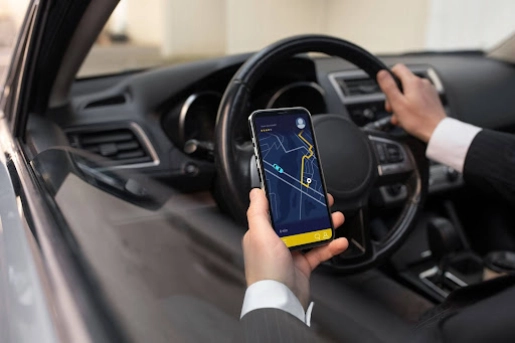
How We Help After an Uber Crash in Fort Wayne

Uber accident claims require evidence that most drivers don’t know exists: app telemetry, GPS tracks, and even digital trip receipts that confirm coverage. Our lawyers gather this data quickly and interpret it alongside the physical crash evidence to prove liability. We start by identifying which of Uber’s three insurance tiers was active at the time of the crash, because that single detail can mean the difference between a $50,000 claim and a seven-figure recovery.

  • Identify the right insurance tier. We determine whether the Uber driver was off the app, waiting for a passenger, or actively transporting one. This distinction decides whether personal or commercial limits apply under Uber’s driver insurance policies.
  • Preserve digital and physical evidence. We issue legal holds to prevent deletion of app logs, obtain 911 audio and dashcam footage, and collect statements while witness memories remain reliable.
  • Reconstruct what happened. Our team models lane position, signal timing, and impact angles to demonstrate visibility and driver reaction windows.
  • Manage communications. We handle adjusters from all involved carriers, ensuring consistent statements and minimizing the risk of contradictions that insurers exploit.
  • Quantify damages thoroughly. Working with treating physicians, rehabilitation specialists, and financial experts, we document both immediate and long-term losses.

Every Uber injury case is built from data, and data disappears fast. Acting within days, not weeks, can determine whether your claim succeeds.

Schedule a free consultation to discuss your case, review available coverage, and understand what the evidence shows. We’ll explain what similar cases have recovered and outline the steps needed to maximize your outcome after an Uber accident.

Speak with a personal injury lawyer today. Call: 317-488-5500

Who Pays After a Fort Wayne Uber Crash

When multiple vehicles, drivers, and insurance tiers collide, identifying the responsible payer becomes complex. Indiana law ties coverage to whether the Uber app was active and what stage of the trip the driver was in. Uber’s insurance structure follows a three-tier model that depends entirely on what the driver was doing when the crash occurred.

  • App off: The driver’s personal policy applies under Indiana’s fault system.
  • App on, waiting for a ride: Limited contingent coverage may supplement personal insurance if the driver’s own policy denies the claim.
  • En route or with a passenger: Uber’s commercial coverage provides the highest limits, up to $1 million in liability in most cases.

Fault can also extend to third parties, such as another driver, the vehicle owner, or a maintenance contractor responsible for unsafe conditions. Our attorneys use evidence like app telemetry, vehicle inspection reports, and employer records to establish who owes compensation.

Attorney Lee C. Christie notes, “Many clients assume Uber automatically pays because the car was an Uber, but that’s not how it works. You have to prove the driver’s app status and connect it to the crash data before their insurer will even consider coverage. That’s where quick legal action makes all the difference.”

Complete a Free Case Evaluation form now

Evidence We Secure Early

To protect your claim, our team captures digital and physical proof before it disappears. This includes:

  • Uber trip logs and app screenshots showing route, time stamps, and passenger details
  • Business or traffic camera footage along corridors like Coliseum Boulevard or Lima Road
  • 911 audio and EPD crash reports
  • Witness contact lists, vehicle inspection reports, and phone data where permissible
  • Corrections to police reports when they contain inaccuracies

When documentation conflicts (for example, if the Uber app shows the driver “offline” while a passenger was boarding), we obtain metadata and coordinate with forensic specialists to clarify the timeline.

Click to contact us today

Common Injuries in Fort Wayne Uber Accidents

Through decades of representing injury victims, we’ve seen that Uber passengers commonly sustain injuries such as:

  • Neck and back injuries from sudden braking or side impacts in compact vehicles.
  • Fractures and joint trauma when passengers are thrown forward against seats or doors.
  • Concussions and mild traumatic brain injuries (TBI) from unbelted positions or head strikes.
  • Soft-tissue and internal injuries aggravated by delayed medical evaluation, especially when adrenaline masks pain.

Our legal team works with orthopedic specialists and rehabilitation experts to connect these injuries to the crash mechanism. We also track secondary complications such as chronic pain syndromes, delayed-onset neurological issues, and lost mobility that influence case value.

What You Can Claim After a Fort Wayne Uber Accident

Full recovery after an Uber accident extends far beyond repair bills. We pursue damages for:

  • Medical treatment and rehabilitation: Hospital care, imaging, surgery, therapy, and any assistive devices required for daily function.
  • Lost income and diminished earning capacity: We coordinate with vocational and economic experts to document the gap between your pre- and post-injury work capacity.
  • Pain and suffering: Emotional distress, anxiety, and changes to your quality of life are fully compensable when properly supported by records.
  • Out-of-pocket and household costs: Travel, medication, and in-home assistance expenses linked to the crash.

We’ve seen insurers undervalue Uber claims simply because the car wasn’t yours. Documentation is what fixes that. Every Uber passenger has the right to full compensation, not the lowest number on a spreadsheet. Our lawyers gather the proof insurers can’t ignore and build damage calculations that reflect the full scope of your injuries.

Talk to a Fort Wayne Uber Accident Lawyer Today

If you were injured in an Uber accident, the details of who was driving, which app was active, and what the data shows will determine your recovery. Our team at Christie Bell & Marshall has handled numerous Uber cases across Indiana, and we know exactly how Uber’s insurers respond when claims come in. That knowledge gives us an edge in negotiating settlements and preparing cases for trial when settlement isn’t enough.

We invite you to schedule a free consultation to discuss your case, review available coverage, and learn how we can protect your rights from day one.

FAQs About Uber Accident Cases in Fort Wayne

How is an Uber accident different from a regular car crash?

Uber accidents add a layer of insurance complexity because multiple policies can overlap or exclude coverage. Liability depends on the Uber driver’s app status (off duty, waiting for a ride, or transporting a passenger) at the exact time of the crash.

Can I sue Uber directly for my injuries?

Usually not. Uber classifies drivers as independent contractors, meaning the company isn’t directly liable unless a corporate-level negligence issue exists, such as defective app safety protocols. However, Uber’s $1 million liability coverage can still apply when the app was active.

What if the Uber driver was between rides?

If the Uber app was on but no passenger was being transported, limited contingent coverage may apply. Our team retrieves trip logs and app data to verify the driver’s status and unlock that supplemental coverage layer.

Do passengers have the same rights as other victims?

Yes. Whether you were an Uber passenger, pedestrian, or occupant of another vehicle, Indiana law allows you to file a personal injury claim when an Uber driver’s negligence caused the crash.

How quickly should I contact a lawyer after an Uber crash?

Immediately. Uber retains trip data for limited periods, and insurers can deny coverage if notice deadlines lapse. The sooner your attorney requests digital records, the stronger your claim becomes.

Will Uber contact me after the crash?

You may receive outreach through the app or by email. Keep communication brief and factual, and avoid signing release forms. Forward any correspondence to your attorney for review to ensure you don’t unintentionally waive rights or limit coverage.