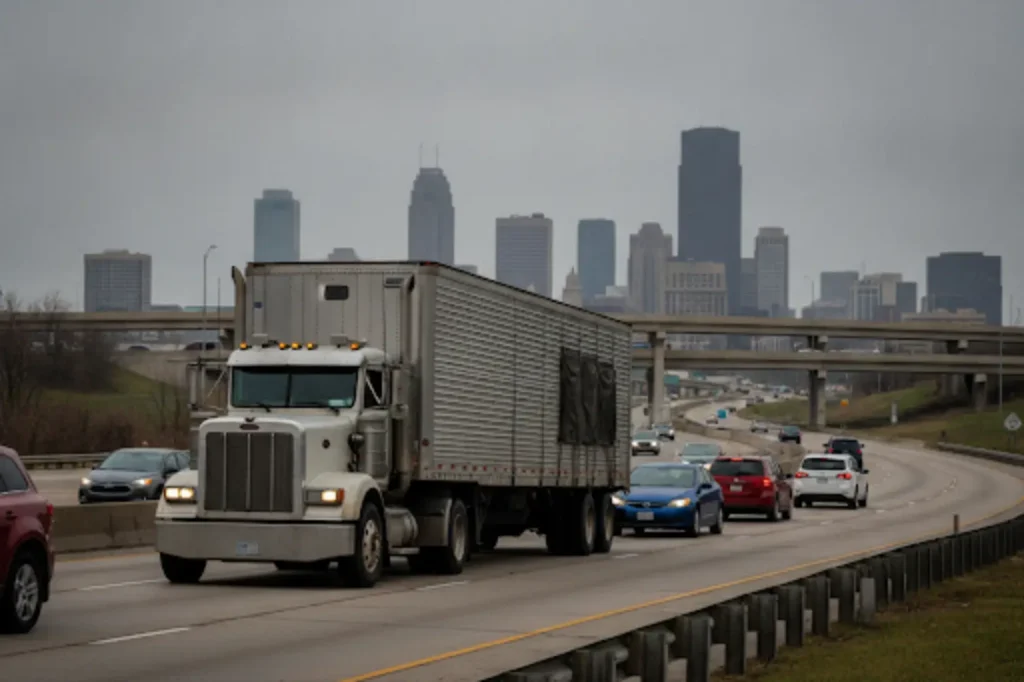
Indiana law sets a specific following distance for trucks, and federal rules govern the driver’s hours, the brakes, and the data recorder in the cab. Getting to that proof before it is overwritten is the difference between a claim built on a police narrative and one built on evidence. If you want to know exactly how those rules apply to your crash, the consultation is free, and you don’t pay unless your case is won.

How Our Indianapolis Truck Rear-End Lawyers Build Your Case

A rear-end truck claim is built on records the carrier would rather not keep, and our job is to reach them before routine deletion does. This is the work our team does in the first weeks, while the evidence still exists. You pay nothing for it unless we make a financial recovery for you.

  • Send a preservation letter within days. Electronic logging device data, dispatch messages, and the engine control module download all sit with the carrier, and federal retention windows are short. A spoliation demand freezes them before routine deletion becomes a lawful excuse.
  • Pull the engine control module and ECM speed history. A heavy truck’s ECM captures road speed, throttle position, and brake application in the seconds before impact. That record settles the question of whether the driver ever braked.
  • Measure the following distance against the Indiana rule. Indiana Code 9-21-8-15 bars a truck or tractor-trailer from following within 300 feet of another truck outside a business or residence district and on interstate highways, except when overtaking. On the rest of the road, IC 9-21-8-14 requires a distance that is reasonable and prudent for the speed, the interval, and the road condition.
  • Audit the brake maintenance file. Under 49 CFR 396.3, a motor carrier must systematically inspect, repair, and maintain every vehicle under its control. Out-of-adjustment brakes on a stopping tractor-trailer are a maintenance failure, not bad luck.
  • Identify every party on the paperwork. The driver, the motor carrier, the trailer owner, and the company that loaded the trailer are frequently four different businesses with four different policies.
  • Document the injuries against the mechanism. Being struck from behind by a vehicle many times your mass produces a distinct injury pattern, and matching the medicine to the physics is what makes a damages figure credible.

Fighting for injured people for 40+ years has taught this firm that truck cases are won in the first month. That is a reason to make the first call now, while the carrier’s records still exist.

Speak with a personal injury lawyer today. Call: 317-488-5500

Why Rear-End Truck Crashes Happen on Indianapolis Roads

Every rear-end truck crash we investigate traces back to a small set of causes, and each one leaves a different paper trail. Working out which one explains your crash is where our team starts, and we start from the carrier’s own records rather than the police summary. That first look costs nothing.

  • Following too closely in stop-and-go traffic. The Harding Street and West Street approaches to downtown bunch up at shift change, and a truck that keeps a car-length gap cannot stop in a car-length distance.
  • Stopping distance the driver misjudged. A loaded combination vehicle needs substantially more room than a passenger car at the same speed, and wet pavement lengthens it further.
  • Fatigue. A driver near the end of a long shift reacts late. Where hours-of-service records show a violation, a driver fatigue accident claim runs alongside the rear-end claim.
  • Distraction inside the cab. Dispatch tablets, phones, and paperwork pull a driver’s eyes off a closing gap.
  • Brake and tire failure. Neglected brakes and worn tires turn a routine slowdown into a collision, and they point liability at the maintenance provider as well as the carrier.
  • Unsecured or shifting loads. A load that moves forward under braking pushes the tractor and lengthens the stop.

Sorting out which of these applies is an evidence question, and Christie Bell & Marshall builds those answers from the carrier’s own records.

Personal Injury 317-488-5500

Indiana Law and Liability in Truck Rear-End Claims

Indiana’s rules decide who pays, how much, and whether a fault argument can take a claim to zero, so we apply them to your facts before the carrier does. Three rules come up in nearly every rear-end truck case we handle. If you want to know where yours stands under each, the consultation is free.

The Rear Driver Is Not Automatically Liable

Indiana does not apply an automatic rule that the following driver is fully at fault. Fault is apportioned, which is why carriers argue that the lead driver stopped short, changed lanes late, or had a burned-out brake light. Those arguments are answerable with ECM data, dashcam video, and lamp inspection, and answering them early keeps the claim intact.

Comparative Fault and the 51 Percent Bar

Indiana uses modified comparative fault. Damages are reduced in proportion to a claimant’s share of responsibility under IC 34-51-2-5, and a claimant assigned 51 percent or more recovers nothing at all under IC 34-51-2-6. Because the bar is absolute, a fault percentage is not a haggling point in this state, it is the case.

Who Answers Beyond the Driver

A motor carrier is responsible for an employee driver acting within the scope of employment, and separately for its own decisions about hiring, training, scheduling, and maintenance. That matters practically: a corporate defendant carries far higher limits than an individual, and identifying the right entity early decides what the claim can actually pay for.

Which of these rules is doing the work in your situation is usually clear within one conversation.

Click to contact us today

Common Injuries in Indianapolis Truck Rear-End Cases

Being struck from behind by a commercial vehicle transfers energy a passenger cabin was never designed to absorb:

  • Traumatic brain injury. Rapid acceleration of the head produces injury even without a direct strike, and symptoms often surface days later.
  • Spinal cord injury. Cervical and thoracic damage from hyperextension and axial loading, with permanent consequences at higher levels.
  • Herniated discs and cervical injury. The most common outcome, and the one carriers most often dismiss as soft tissue despite surgical treatment.
  • Bone fractures. Ribs, sternum, wrists, and lower legs from restraint loading and footwell intrusion.
  • Internal organ injury. Blunt abdominal trauma from seat belt loading, sometimes with delayed bleeding.
  • Burns and crush injuries. Where the passenger compartment is compromised or fuel is released.
  • Wrongful death. Underride and high-speed rear impacts are among the deadliest crash types on Indiana roads.

Documenting each injury from the first emergency visit forward is what keeps a life-altering event from being valued as a fender bender, and our team coordinates with Indiana treating specialists from the start.

What Compensation Can You Recover After a Truck Rear-End Crash in Indianapolis

Damages in a commercial vehicle case are built from the medical record and the wage history, then tested against the coverage the carrier actually has. Because Indiana reduces an award by any share of fault assigned to you, the liability work and the damages work cannot be separated.

  • Economic damages. Emergency transport, hospitalization, surgery, rehabilitation, projected future treatment, lost wages, and diminished earning capacity where an injury is permanent.
  • Non-Economic damages. Physical pain, loss of enjoyment of life, and the psychological effects that follow a violent collision. The types of damages you can be compensated for in Indiana reach further than most people expect.
  • Future medical and care costs. Where an injury requires ongoing treatment, surgical revision, or attendant care, those costs are projected by treating physicians and life care planners rather than estimated.
  • Loss of household services. The work you did at home that someone else now has to do or be paid to do.

Christie Bell & Marshall builds these figures with economic experts and treating physicians before a demand goes out, because a number assembled from the acute bills alone is a number the carrier is happy to pay.

Do You Have an Indianapolis Truck Rear-End Claim?

Katherine M. Marshall is a partner at the firm who is trained in commercial truck driving, which gives her a working knowledge of logbooks, braking distances, and what an electronic logging device actually records. Here is her perspective on rear-end truck claims in Indianapolis.

“The carrier’s own data usually tells the truth faster than any witness. Road speed, brake application, and the driver’s hours are all recorded somewhere, and when we get to them early the argument about who stopped short tends to end quietly.”

Do You Qualify?

A truck rear-end claim is worth reviewing if:

  • A commercial vehicle struck you from behind while you were stopped, slowing, or in stop-and-go traffic
  • The police report notes following too closely, a brake defect, or a driver log discrepancy
  • You were transported for evaluation or developed neck, back, or cognitive symptoms in the days afterward

What Cases Like Yours Have Recovered

One CBM client recovered $18,500,000 after a negligent truck driver caused a traumatic brain injury. A separate matter produced $6,000,000 in the wrongful death of a 66-year-old man. The rest are set out on our case results page. Past results cannot guarantee what any individual case will produce, because every claim turns on its own facts.

If you are not sure whether the carrier is taking your injuries seriously, that is usually a sign worth acting on.

Contact an Indianapolis Truck Rear-End Lawyer

Medical bills arrive on a schedule that ignores your recovery, and a motor carrier’s investigators are working from the day of the crash. Decades of Indiana trial experience and an evidence-first approach are what let this firm answer that head start rather than react to it.

Schedule your free consultation with Christie Bell & Marshall. That conversation is confidential, carries no obligation, and gives you a clear picture of what to expect while you concentrate on getting better.

FAQs About Indianapolis Truck Rear-End Accidents

Can you sue a truck driver who rear-ended you?

Yes, and in most cases the claim reaches further than the driver. The motor carrier is responsible for an employee driver acting within the scope of employment, and often for its own hiring, training, and maintenance decisions. Naming the right defendants is what determines the insurance available to pay a serious claim.

Is the deadline different when the defendant is a company, not a driver?

No, and that surprises people. A claim against a motor carrier follows the same two-year deadline under IC 34-11-2-4 as a claim against any driver. What differs is everything before that date. A corporate defendant destroys its own records on a schedule, a governmental entity has to receive formal notice inside months rather than years, and the truck itself is back on the road within days. The filing deadline is the least urgent clock in a truck case.

I got rear-ended by a semi in Indiana. What should I do first?

Get evaluated even if you feel able to walk away, report the crash, and photograph both vehicles including the truck’s door markings and USDOT number. Do not give the carrier’s insurer a recorded statement before speaking with a lawyer, and do not let your vehicle be repaired or salvaged until it has been inspected.

How far back is a truck required to stay in Indiana?

On interstate highways and outside business or residence districts, a truck or tractor-trailer may not follow within 300 feet of another truck except when overtaking. Everywhere else the standard is a distance that is reasonable and prudent given speed, spacing, and road conditions.

What if the trucking company says I stopped suddenly?

That is the standard defense, and it is testable. Engine control module data shows the truck’s speed and braking, scene evidence shows spacing, and your vehicle’s lamps can be inspected. Because Indiana bars recovery at 51 percent fault, this argument deserves a real answer rather than a concession.