How Christie Bell & Marshall Handles T-Bone Crash Cases

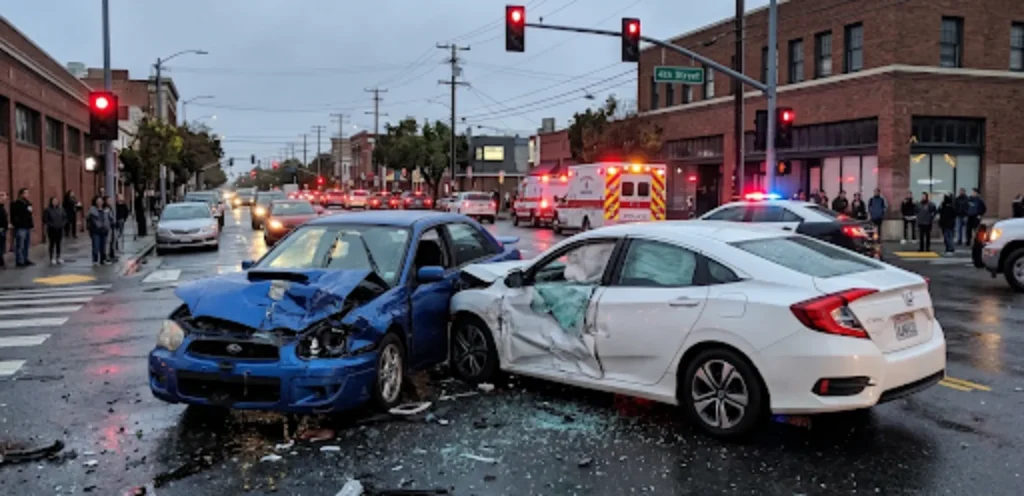
T-bone crashes at Fort Wayne intersections are among the most heavily disputed accident cases we handle. Both drivers claim they had the right of way. Both insurance companies back their client’s version. Without objective evidence, the case becomes a credibility contest that benefits the insurer.

We take that uncertainty off the table by building every T-bone case on physical evidence rather than competing driver accounts. Our goal is to establish liability so clearly that the insurer cannot dispute it, then document injuries thoroughly enough that they cannot undervalue them. That combination is how intersection crash cases reach their full potential.

If you were hit in a Fort Wayne T-bone crash, get in touch to talk with a lawyer about your options and next steps. We offer free consultations, and you pay no fee unless we recover compensation for you.

How We Investigate Fort Wayne T-Bone Accidents

The evidence that determines who ran the light, who had the right of way, and how fast each vehicle was traveling often disappears within hours or days. We begin an investigation immediately.

  • Traffic camera and surveillance footage. We identify all cameras covering the intersection and send preservation requests before footage is overwritten.
  • Electronic data recorder (EDR) analysis. Both vehicles in a T-bone crash typically have EDRs that record speed, braking, throttle position, and other data in the seconds before impact. This data often directly contradicts what the at-fault driver claims and is subpoenaed before the vehicle is repaired or sold.
  • Accident reconstruction. In serious injury cases, we retain qualified reconstructionists who can establish vehicle speeds, directions of travel, and the sequence of events from physical evidence.
  • Witness canvassing. We identify and interview witnesses while their memories are fresh and before they become difficult to locate.
  • Police report. We secure these records and analyze them for inconsistencies with the at-fault driver’s account.

Attorney Katherine M. Marshall notes:

“Compensation can range from covering medical bills and missed work to substantial recovery for life-changing injuries. The outcome depends on clear proof of liability, complete medical documentation, and persuasive evidence of how the injuries affect daily life.

We help by moving fast to lock down objective evidence, then working with your treating providers and qualified experts to document future care needs, work limitations, and the full value of your losses.

Speak with a personal injury lawyer today. Call: 317-488-5500

Injuries Common in Fort Wayne T-Bone Crashes

Side-impact crashes expose occupants to lateral forces with limited structural protection. And the injuries we see most frequently in T-bone cases are among the most serious in our practice. Some of the injuries we commonly consider for clients’ claims include:

  • Traumatic brain injuries 
  • Spinal injuries
  • Pelvic and hip fractures
  • Chest and abdominal trauma
  • Shoulder and arm injuries

Indiana law allows T-bone crash victims to pursue full economic and non-economic damages. In serious side-impact cases, the damages reflect the severity of injuries that come from having minimal structural protection between you and the other vehicle.

Complete a Free Case Evaluation form now

Compensation You May Be Entitled To

In a free consultation, we can assess your injuries and explain the next steps to protect your claim. Schedule your consultation now to discuss the compensation we can pursue for your case:

Economic Damages

All past and future medical expenses, from emergency trauma surgery and ICU admission through rehabilitation, therapy, specialist care, medications, and assistive devices. Lost wages during recovery and reduced future earning capacity when injuries limit your ability to work. Long-term care costs if your injuries are permanent.

Non-Economic Damages

Physical pain and suffering from the impact and ongoing recovery. Emotional distress, anxiety, and the psychological toll of a serious crash. Loss of enjoyment of life and disruption to your relationships and daily routine.

Click to contact us today

Contact a Fort Wayne T-Bone Accident Attorney Today

Our firm handles serious injuries exclusively. We invest the investigative and legal resources that intersection crash cases require and do not push clients toward quick settlements when the facts and the damages support more. When you hire Christie Bell & Marshall, you get direct attorney access and a team that is prepared to go to trial if that is what accountability requires.

Contact us for a free consultation. No attorney fees unless we make a financial recovery for you.

Frequently Asked Questions About T-Bone Collisions in Fort Wayne

How do you prove who ran the red light in a T-bone crash?

The most direct evidence is surveillance or traffic camera footage from the intersection or adjacent businesses — footage that shows what the light was displaying at the moment of impact. Electronic data recorder information from both vehicles can also show speed and braking behavior, which is inconsistent with a driver who actually had the green light. Witness accounts, police investigation notes, and physical evidence from the scene also contribute to the analysis.

What if both drivers claim they had the green light?

This is common in T-bone cases, and it’s why physical evidence and surveillance footage matter so much. When the drivers’ accounts directly conflict, the objective evidence — camera footage, EDR data, physical evidence at the scene, and reconstruction analysis — determines how fault is assigned. Our investigation is designed to develop that evidence as quickly as possible after the crash.

Can I recover even if I was partially at fault for the T-bone crash?

Indiana’s modified comparative fault system allows recovery as long as your fault does not exceed 50 percent. Your damages are reduced proportionally by your share of fault. So if you were 20 percent at fault and your damages total $200,000, you recover $160,000. The insurer’s goal is to inflate your percentage — our goal is to ensure fault is allocated accurately based on the evidence.

What is Indiana’s right-of-way law at intersections?

Indiana Code § 9-21-8-21 requires drivers to yield to vehicles already in or approaching an intersection when they face a stop or yield sign. IC § 9-21-3-7 requires compliance with traffic control signals. Failure to yield or running a red light is a statutory violation that constitutes negligence per se in civil claims. These violations are the legal foundation of most T-bone liability arguments.

How long do I have to file a claim in Indiana?

Indiana Code § 34-11-2-4 establishes a two-year statute of limitations for personal injury claims. Missing this deadline forecloses your right to recovery entirely. However, the investigation should begin immediately — evidence disappears, witnesses move, and camera footage is overwritten within days or weeks of the crash.

The other driver said I ran the light. What should I do?

Do not give a recorded statement to the other driver’s insurer without legal counsel. The adjuster will ask questions designed to elicit statements that support their client’s version of events. Contact an attorney as soon as possible so that evidence can be preserved and the investigation can begin before the at-fault driver’s insurer establishes a narrative that is difficult to dislodge.