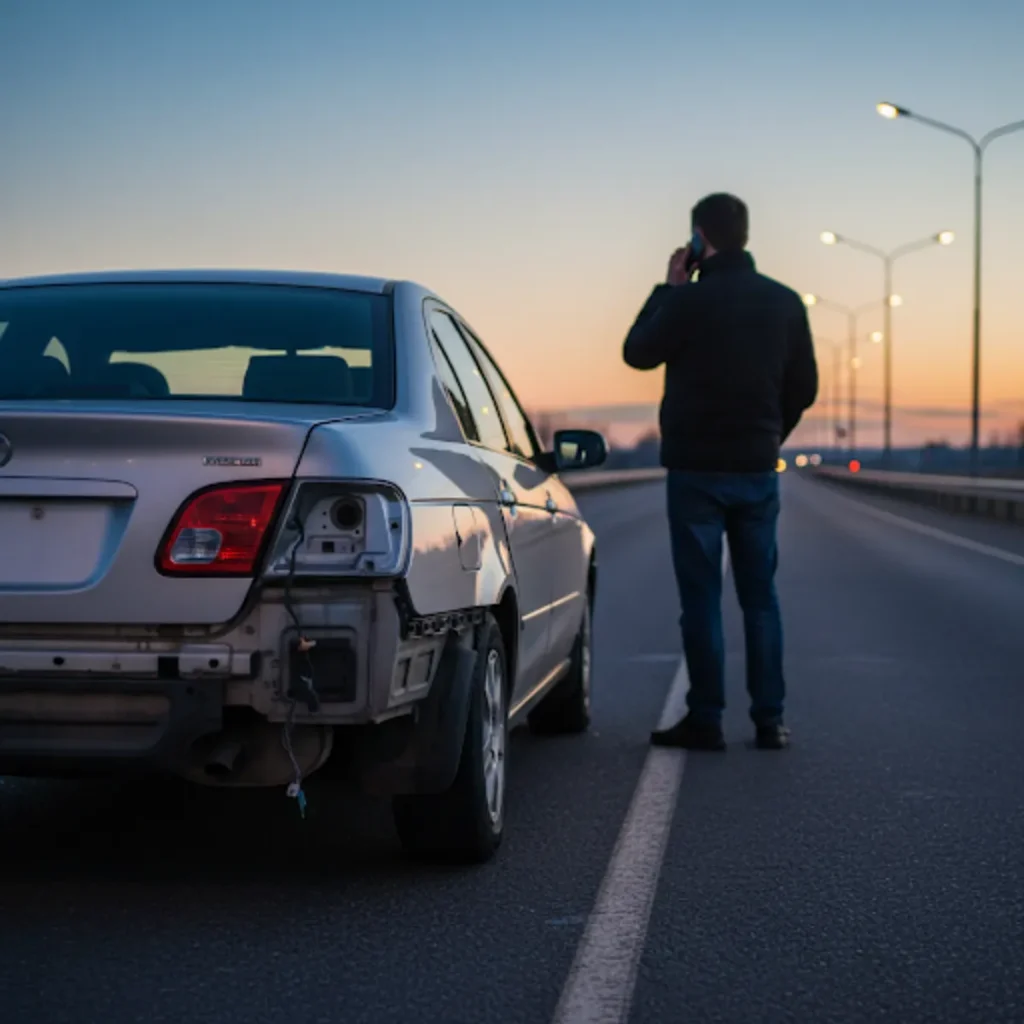
How Our Bloomington Hit and Run Lawyers Build Your Case

Most hit-and-run files start with no plate number, a partial vehicle description, and a police case that closes within weeks. The civil track does not wait on a criminal ID, because Indiana’s uninsured motorist framework lets your own carrier step into the empty chair the fleeing driver left.

Our team builds a Bloomington hit-and-run file with:

  • Canvass surveillance and dashcam coverage along the flight path. Storefront, gas station, and apartment-complex cameras often catch the vehicle, sometimes with enough plate detail for an ALPR match.
  • Pull intersection traffic-camera footage and 911 audio with retention requests. Bloomington and INDOT keep these on tight retention windows, so a preservation letter in the first week is what keeps them.
  • Forensically recover paint transfer, taillight shards, and trim debris. A specialist matches the fragments to a make, model, and year, giving admissible ID evidence when a candidate vehicle surfaces.
  • Subpoena ALPR data from agencies along the corridor. Bloomington PD, the Sheriff, INDOT, and IU Police all run plate readers that often catch the fleeing plate at a nearby intersection.
  • File the uninsured motorist claim with your own carrier in parallel. UM claims carry their own short notice deadlines, and missing them can wipe out coverage even if the driver is never found.
  • Coordinate with the criminal case if one opens. Charging documents, pleas, and restitution orders feed the civil file and often shortcut the discovery the carrier would demand.

A missing driver does not mean a missing case: your uninsured motorist coverage answers while the camera, ALPR, and forensic work runs in parallel to chase the plate. Our case results show what that two-front approach has recovered even when law enforcement never names a driver. Reach out for a free review, and we will start the UM notice and the camera canvass the same week you call.

Speak with a personal injury lawyer today. Call: 317-488-5500

Indiana Law on Hit and Run Liability

A hit-and-run in Indiana is both a criminal offense and a civil tort on a separate, parallel track. The civil case can reach the fleeing driver if identified, the driver’s carrier, your own UM carrier, and sometimes an employer, and stacking those defendants early is what gives a no-identification file a real path to recovery.

In a free consultation, our Bloomington attorneys will consider these laws as they apply to your crash and explain your options.

  • Duty to stop and render aid. IC 9-26-1-1.1 requires drivers in an injury crash to stop, assist, and exchange information, and a violation supports negligence per se alongside any criminal charges.
  • Uninsured motorist coverage. Indiana policies include UM coverage unless you signed a written rejection, and a hit-and-run counts as an uninsured-driver claim, so your own carrier becomes the responsible party in the empty chair.
  • Modified comparative fault. IC 34-51-2 lets you recover when you are 50 percent or less at fault, and documenting your own conduct early defuses the share a UM carrier will try to assign you for visibility or lane choice.
  • Statute of limitations. You have two years to file suit under IC 34-11-2-4, but your UM policy’s contractual notice can run as short as 30 days, and missing it can cost coverage even while the statutory window is open.

We line up every hit-and-run file against that full set of defendants from day one. The criminal case alone never moves the carrier on civil damages, and a late UM claim is the fastest way to lose a recovery the policy would pay.

Complete a Free Case Evaluation form now

Common Injuries in Bloomington Hit and Run Crashes

Hit-and-run impacts often involve other drivers. They also involve pedestrian, cyclist, and motorcycle victims. These road users are more exposed, and may not be able to record a plate after impact. The injuries we most often document on a Bloomington hit-and-run file include:

  • Traumatic brain injury from contact with the hood, windshield, or pavement on a pedestrian or cyclist strike.
  • Pelvic, hip, and femur fractures from a side-on vehicle impact at typical Bloomington urban speeds.
  • Spinal cord and cervical injuries from being thrown by the impact onto the roadway.
  • Multiple limb fractures to the tibia, fibula, and ankle from being struck while crossing.
  • Internal organ trauma from a direct vehicle-to-body impact, often missed on initial assessment until imaging catches it.
  • Severe road rash, degloving, and burn injuries from sliding contact with asphalt at speed.
  • Wrongful death and survivor PTSD when the strike is high-energy or the victim was not found in time for emergency care.

A UM demand rises or falls on whether the early treatment record matches the injury severity, because your own carrier’s defense team works the same playbook a third-party defense would. We loop in trauma teams, retain neurology and orthopedic consultants where the imaging warrants, and bring in life-care planners before the policy demand goes out.

Click to contact us today

What Compensation Can You Recover After a Bloomington Hit and Run

Indiana law lets you pursue the same categories of damages a third-party claim would, with the policy limit setting the ceiling.

Economic Damages

  • Trauma admission, surgery, and inpatient rehab.
  • Future orthopedic and neurological care.
  • Attendant care and home modifications.
  • Wages and income you have already missed.
  • Reduced earning capacity.
  • Replacement of the vehicle or bicycle struck.
  • Out-of-pocket costs that pile up while you are out of work.

Non-Economic Damages

  • Pain and suffering.
  • Loss of enjoyment of life.
  • Disfigurement.
  • Emotional distress.
  • Loss of consortium for a spouse.
  • Wrongful death damages under IC 34-23-1, including medical and burial expenses, projected lifetime earnings, household services, and surviving family losses.

Stacking and Additional Coverage Layers

  • UM coverage on every household vehicle when the policy allows stacking.
  • Employer or commercial coverage if you were on the job.
  • Any liable third party, such as a roadway designer or product manufacturer, that the facts support.

Our team retains those experts at the start of the file and builds the documentation alongside your treatment, because the same evidence that wins arbitration is what the carrier uses to delay.

What Cases Like Yours Have Recovered

Recent Christie Bell & Marshall recoveries on serious crash and multi-claimant injury files include:

  • A $18,500,000 recovery for a client who suffered a traumatic brain injury caused by a negligent truck driver, the kind of catastrophic-neuro outcome that pedestrian and cyclist hit-and-run strikes routinely produce.
  • A $2,400,000 recovery for a mother and her two daughters injured in a single crash, the kind of multi-occupant outcome a hit-and-run T-bone where a family is in the cabin can produce.

We encourage you to get in touch about a hit-and-run like yours, and our team will give you a candid first-look at the uninsured-motorist and coverage picture during a free consultation.

Contact a Bloomington Hit and Run Accident Attorney at Christie Bell & Marshall

The free consultation with our Bloomington team breaks down which UM and third-party coverage layers apply, what we can preserve before the retention windows close, and what the file is realistically worth. No fee unless we win, and the conversation is confidential, carries no obligation, and gives you a clear picture of what to expect. Contact Christie Bell & Marshall to schedule yours.

FAQs About Bloomington Hit and Run Accidents

How can I recover if the driver who hit me fled the scene and was never identified?

Your own uninsured motorist coverage is usually the answer, since Indiana policies include UM coverage unless you signed a written rejection and a hit-and-run counts as an uninsured-driver claim. We file with your carrier and pursue the same damages a third-party claim would, up to the policy limit.

What evidence is most useful to identify a fleeing driver in Bloomington?

The highest-yield sources are surveillance and apartment-complex video, intersection cameras, ALPR hits, scene paint and debris, and rideshare dashcam footage. We send preservation letters on day one because most of those systems overwrite within 14 to 30 days.

What if I find the driver months later, after the criminal case has closed?

You still have the civil claim. IC 34-11-2-4 gives you two years from the crash regardless of when the driver is found, and we coordinate with your UM carrier so the policy stays available alongside any recovery from the identified driver.

Can the driver be held criminally responsible and also sued in civil court?

Yes. The tracks are independent, and a conviction under IC 9-26-1-1.1 usually establishes civil duty and breach. Criminal restitution is credited against a civil recovery but does not bar the claim.

How long do I have to file a hit-and-run claim in Indiana?

IC 34-11-2-4 gives you two years from the crash, but your UM policy usually has a much shorter notice deadline of 30 to 60 days that can wipe out coverage if missed. The contract clock is the one that catches most people by surprise.