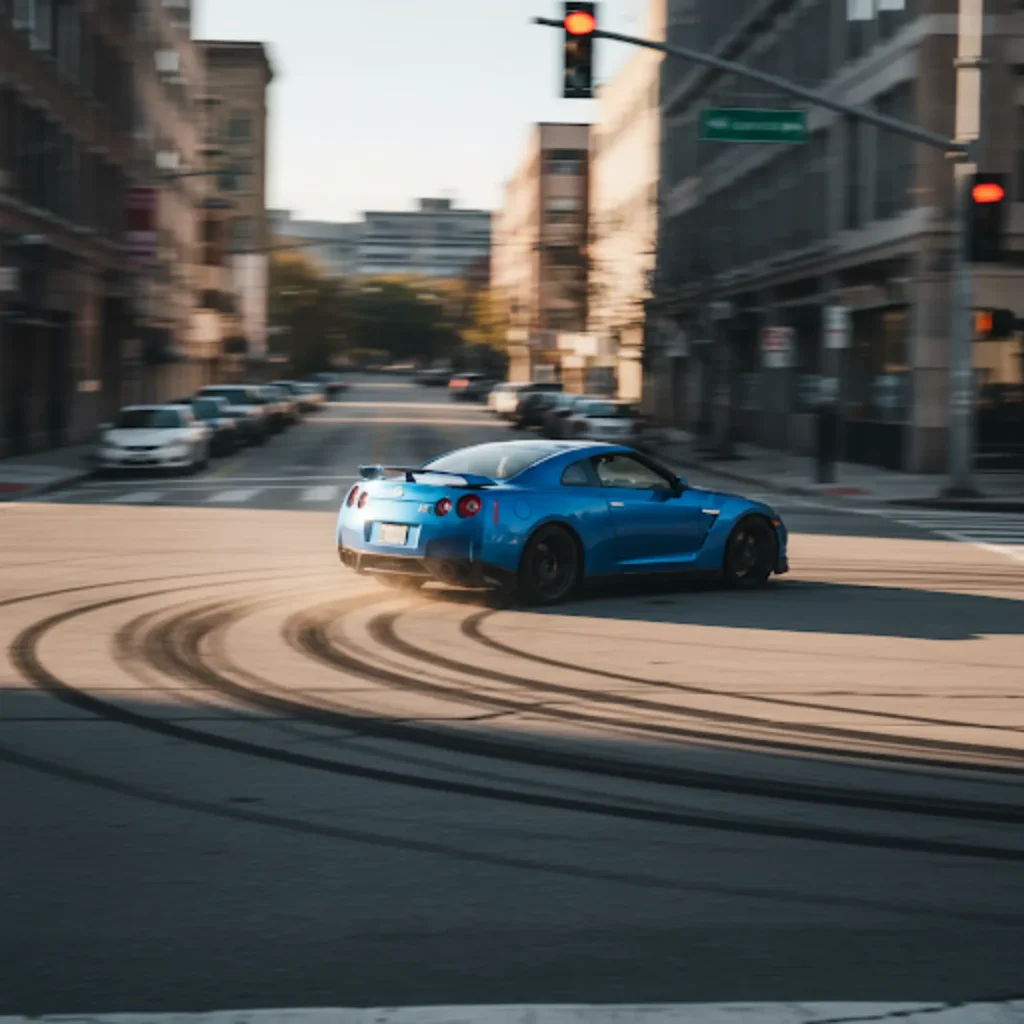
How Our Bloomington Speeding Accidents Lawyers Build Your Case

NHTSA ties speeding to roughly a third of U.S. traffic fatalities, and adjusters rarely concede it without airtight proof, because every mile per hour over the limit shifts the comparative fault math. Our team builds that proof from multiple data streams so a single denial cannot kill the claim:

  • Download both vehicles’ event data recorders. EDRs log pre-impact speed, throttle, brake, and steering in the five seconds before contact, usually establishing how fast the at-fault driver was going.
  • Reconstruct speed from physical evidence. An engineer back-calculates impact speed from skid length, rest position, and crush depth, corroborating the EDR when the defense challenges it.
  • Pull dashcam video from commercial vehicles in the area. I-69, the SR 45/46 Bypass, and State Road 37 carry steady semi traffic that often captures the speed differential.
  • Subpoena cell phone activity. Carrier records timestamped to the second show whether the driver was texting or app-scrolling while accelerating.
  • Obtain the citation history and crash report. OSCR entries, contributing-factor codes, and any speeding citation become foundational documents the carrier cannot ignore.
  • Run a black-box and infotainment download for newer vehicles. These systems log Bluetooth pairing, navigation, and app activity that adds distraction context to the speed numbers.

Two independent reads on the same speed, one from the data recorder and one from the reconstruction, give a defense expert almost nothing to argue with. Our case results reflect what that proof has done on serious Indiana files. Reach out to Christie Bell & Marshall for a free review, and we will start the speed-evidence work the same week, since EDR data and dashcam footage can be gone within days.

Speak with a personal injury lawyer today. Call: 317-488-5500

Where Speeding Crashes Happen Around Bloomington

Where the speeding happened changes which evidence we go after first, and the Indiana Crash Facts report lists excessive and unsafe speed as recurring factors on Indiana highways and interstates. A 75-in-a-55 case on I-69 rides on EDR data and dashcam footage from passing semis, while a campus-crosswalk case rides on storefront video and witness work. The corridors that produce most of our Bloomington speeding cases:

  • The I-69 Monroe County stretch.
  • The SR 45/46 Bypass.
  • State Road 446 toward Lake Monroe.
  • State Road 46 east toward Brown County.
  • 3rd Street and the IU campus perimeter.

Your Bloomington speeding accident lawyer at Christie Bell & Marshall steers the evidence work toward whatever the corridor demands, from EDR data on an I-69 merge to storefront video at a campus crosswalk.

Complete a Free Case Evaluation form now

Indiana Law on Speeding and Liability

Two Indiana speeding statutes can support liability: the reasonable-and-prudent-speed duty that applies even within the limit, and the posted-limit statute behind a negligence-per-se finding. Documented speeding establishes breach, blunts any comparative fault aimed at you, and in the right pattern opens a punitive damages theory.

Reasonable and Prudent Speed

Indiana Code 9-21-5-1 requires a speed that is reasonable for the conditions, even within the posted limit. A 55 mph driver can still be liable in heavy rain, fog off Lake Monroe, or thick bypass traffic that called for slowing down.

Posted Speed Limits and Negligence Per Se

IC 9-21-5-2 sets statutory limits by roadway type, with separate school- and construction-zone rules. A driver over the posted limit has breached a statutory duty, supporting a negligence-per-se finding when that caused the crash.

Modified Comparative Fault

Under IC 34-51-2, you can recover when you are 50 percent or less at fault. Insurers may assign you a slice for “failure to anticipate” or “lane choice,” but documented speeding shifts the bulk of fault back to the driver.

Punitive Damages for Reckless Speeding

When the driver was racing, going at extreme excess speed, or combining speed with impairment, IC 34-51-3 supports punitive damages. The cap is the greater of $50,000 or three times compensatory damages.

Statute of Limitations

Two years from the crash to file suit under IC 34-11-2-4. If a public entity shares blame for road design or signage, the Indiana Tort Claims Act adds notice deadlines as short as 180 days.

We measure every file against this statutory checklist before drafting the demand, since the right mix of negligence-per-se, comparative fault, and punitive theory often raises the carrier’s reserve. Decades of Indiana practice taught us how each statute moves a settlement.

Click to contact us today

Common Injuries in Bloomington Speeding Crashes

On speeding cases, the trauma we most often work to document includes:

  • Traumatic brain injury from acceleration-deceleration forces and head contact with interior surfaces.
  • Spinal cord injuries including cervical fractures and incomplete paralysis from severe deceleration loading.
  • Multiple long-bone fractures of the femur, tibia, and humerus from intrusion and occupant motion.
  • Internal organ damage including aortic dissection, splenic laceration, and bowel injury from belt loading at high speed.
  • Burns and inhalation injury when high-speed impact causes fuel ignition or post-crash fire.
  • Pedestrian and cyclist crush trauma when the speeding driver strikes a person crossing or riding legally.
  • Wrongful death outcomes that increase steeply once impact speeds exceed 50 miles per hour.

Documenting severity from the first hospital visit is critical, because any gap between the crash and the first specialist appointment becomes a defense argument at deposition. Christie Bell & Marshall coordinates with Indiana specialists and rehab providers from day one so the record reflects the full scope of harm.

What Compensation Can You Recover After a Bloomington Speeding Crash

Speed-related crashes often generate damages beyond the at-fault driver’s policy, especially since Indiana only requires $25,000 per person in bodily injury coverage. That gap is why we examine every coverage layer: the driver’s policy, any employer or commercial coverage, your own underinsured motorist coverage, and any product or governmental defendant the facts open up. On a typical Bloomington speeding file, we pursue:

Economic Damages

Hospital and trauma bills land first, but the future-care number usually dwarfs them. We build the file around projected orthopedic revisions, neurology follow-up, pain management, attendant care, vehicle replacement, and the lost earnings you have missed plus the earning capacity you may never get back.

Non-Economic Damages

The harm a high-speed crash does to your daily life shows up in pain and suffering, in the activities and relationships you can no longer participate in, and in the disfigurement or scarring that comes with severe trauma. A spouse can pursue loss of consortium when the relationship has been altered, and Indiana’s Wrongful Death Act adds further categories when the crash took a life.

Punitive Damages

Punitive damages are most often available in speeding cases when the at-fault driver was racing, exceeded the limit by an extreme margin, or combined high speed with intoxication. The cap under IC 34-51-3 applies, but punitive exposure shifts settlement posture dramatically.

Christie Bell & Marshall works with economic experts, biomechanical engineers, and life-care planners on every serious file, because demanding a future-loss number without that workup is how speeding cases settle for half their value. Years of trial work shape how we value those losses and push past an insurer’s first offer.

What Cases Like Yours Have Recovered

Recent Christie Bell & Marshall recoveries on motor-vehicle and vulnerable-road-user crash files include:

  • A $60,000,000 recovery for an Avon, Indiana motorcyclist seriously injured on Rockville Road when struck by a truck driven by a corporate employee, a case that turned on documented driver conduct and a deep-pocketed commercial defendant.
  • A $2,200,000 recovery for a 24-year-old cyclist riding with a charity group and struck by a pickup truck, where the impact severity drove a substantial result.

We encourage you to get in touch about a high-speed crash like yours, and our team will walk you through a realistic case path in a free consultation.

Contact a Bloomington Speeding Accidents Lawyer at Christie Bell & Marshall

We get to work while you get to heal. The first consultation is free, and Christie Bell & Marshall charges no fee unless we make a financial recovery for you. Schedule your free consultation with our Bloomington team and we will start the speed-evidence work the same week.

FAQs About Bloomington Speeding Accidents

How do you prove a driver was speeding on I-69 when there was no police citation?

Multiple data streams establish speed without a citation: both EDRs capture the five seconds before impact, reconstruction back-calculates speed from skid and crush, and dashcam, GPS, and telematics corroborate. We routinely prove speeding with no ticket at all.

Can I recover punitive damages if the other driver was racing or speeding excessively?

Yes, in the right pattern. Racing, extreme excess speed, or speed with impairment usually meets the conscious-disregard standard under IC 34-51-3, capped at the greater of $50,000 or three times compensatory damages.

Does speeding alone establish fault under Indiana law?

Speeding above the posted limit is negligence per se under IC 9-21-5-2, so duty and breach are established by the speed itself. Causation stays a separate question, which reconstruction and stopping-distance analysis answer.

What if the speeding driver claims I changed lanes in front of them?

EDR data usually answers it by showing both drivers’ speed and steering at impact, with nearby video adding confirmation. Even if a lane change contributed, modified comparative fault under IC 34-51-2 lets you recover when you are 50 percent or less at fault.

How long do I have to file a speeding accident claim in Indiana?

IC 34-11-2-4 gives you two years from the crash. If a public entity is involved, Indiana Tort Claims Act notice is due within 180 days for a city or county defendant and 270 days for the state.